
High-Probability Trading Architectures
Bangkok Quant Systems develops rigorous, data-driven frameworks designed to extract repeatable alpha from global markets. Our research focuses on the intersection of structural inefficiency and statistical edge.
Core Research Domains
We do not chase speculative trends. Our quant systems are built on three foundational pillars of market behavior: Mean Reversion, Momentum, and Structural Arbitrage.
Statistical Mean Reversion
01 // RVROur mean reversion models exploit temporary price dislocations where assets deviate significantly from their historical or fundamental value. By utilizing multi-factor Z-score analysis and proprietary volatility filters, these systems identify over-extended price action with a high probability of correction.
- Intra-day gap fading
- Pair-trading co-integration
- Volatility-adjusted entries
- Mean-variance optimization
Systematic Momentum
02 // MTUMCapitalizing on "herd behavior" and fundamental trend shifts, our momentum quant systems identify strong capital flows. We use non-linear regression and time-series analysis to differentiate between noise and sustainable unidirectional movement.
- Trend-following filters
- Relative strength ranking
- Stop-loss dynamic scaling
- Volume-profile confirmation
Structural Arbitrage
03 // ARBThese models leverage specific market architecture flaws, such as index rebalancing, exchange latency differentials, or regulatory constraints that force institutional selling. We look for "guaranteed" liquidity events that create temporary price imbalances.
- Index rebalancing flows
- Cross-venue price sync
- Corporate action event-driven
- Liquidity-provision capture

Infrastructure Built for Precision Execution
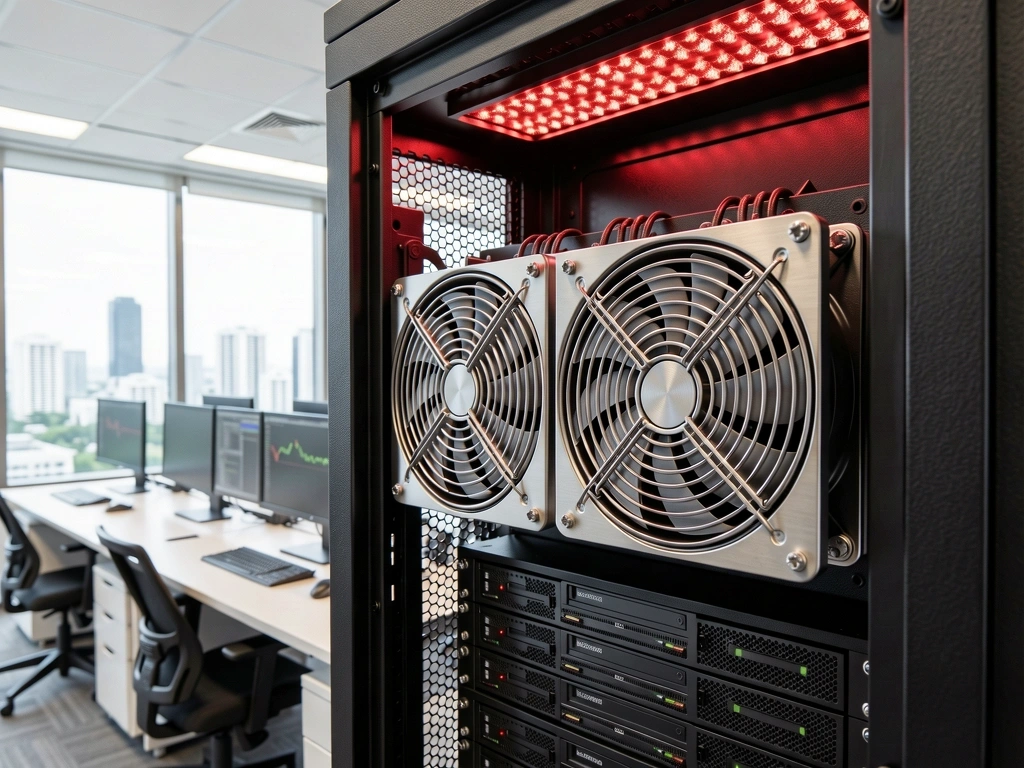
A model is only as effective as the environment it runs in. Our systems are housed in Tier-IV data facilities to ensure near-zero latency and 99.99% uptime.
Low-Latency Compute
Execution engines optimized for sub-millisecond price-to-order cycles.
Historical Backtest Depth
Petabytes of tick-by-tick data dating back over a decade for walk-forward validation.
The Development Lifecycle
Hypothesis
Every model begins with a verifiable observation of market behavior or a structural anomaly identified by our Bangkok-based research team.
Validation
Rigorous backtesting includes slip models, transaction costs, and Monte Carlo simulations to ensure the edge is not a statistical fluke.
Incubation
New models enter a "paper trading" or small-capital incubation phase where live performance is compared to backtest expectations.
Production
Fully validated systems are deployed with continuous risk monitoring and real-time adjustment triggers for changing regimes.
Active Market Reach
Our trading systems are designed for high-liquidity environments where systematic edge can be captured without significant market impact.
Built-In Failure Protocol
No quantitative system is infallible. At Bangkok Quant Systems, risk management is not an afterthought—it is a core mathematical component of every model. We employ hard-coded circuit breakers, drawdown limits, and regime-switch detection as standard architecture.
Informational purposes only. Bangkok Quant Systems does not offer retail financial advice or trading signals.
Quant systems and systematic trading involve significant risk of loss. Historical performance is not indicative of future results.
All research conducted at Bangkok 59 facility. Final Build: March 2026.