
Beyond the Backtest:
Quant Systems Built for Reality.
In the world of quantitative trading, a high-performing backtest is the beginning, not the end. We employ a multi-layered verification process designed to separate statistical coincidence from genuine market edge.
The Anti-Fragility Framework
Most retail trading models fail because they are over-optimized to past noise. At Bangkok Quant Systems, our methodology is built to identify model fragility before a single dollar is deployed.
01. Out-of-Sample Validation
We strictly segregate data into training, validation, and testing sets. A model is only considered viable if it performs with statistical significance on data it has never "seen" during parameter tuning.
02. Transactional Realism
Theoretical profits often vanish in the face of slippage and commissions. We factor in aggressive execution costs and latency assumptions based on current institutional liquidity levels in Bangkok and global hubs.
03. Regime Resilience
Models are stress-tested against historical anomalies—flash crashes, interest rate shocks, and sudden volatility spikes—to ensure drawdown profiles remain within predefined bounds.
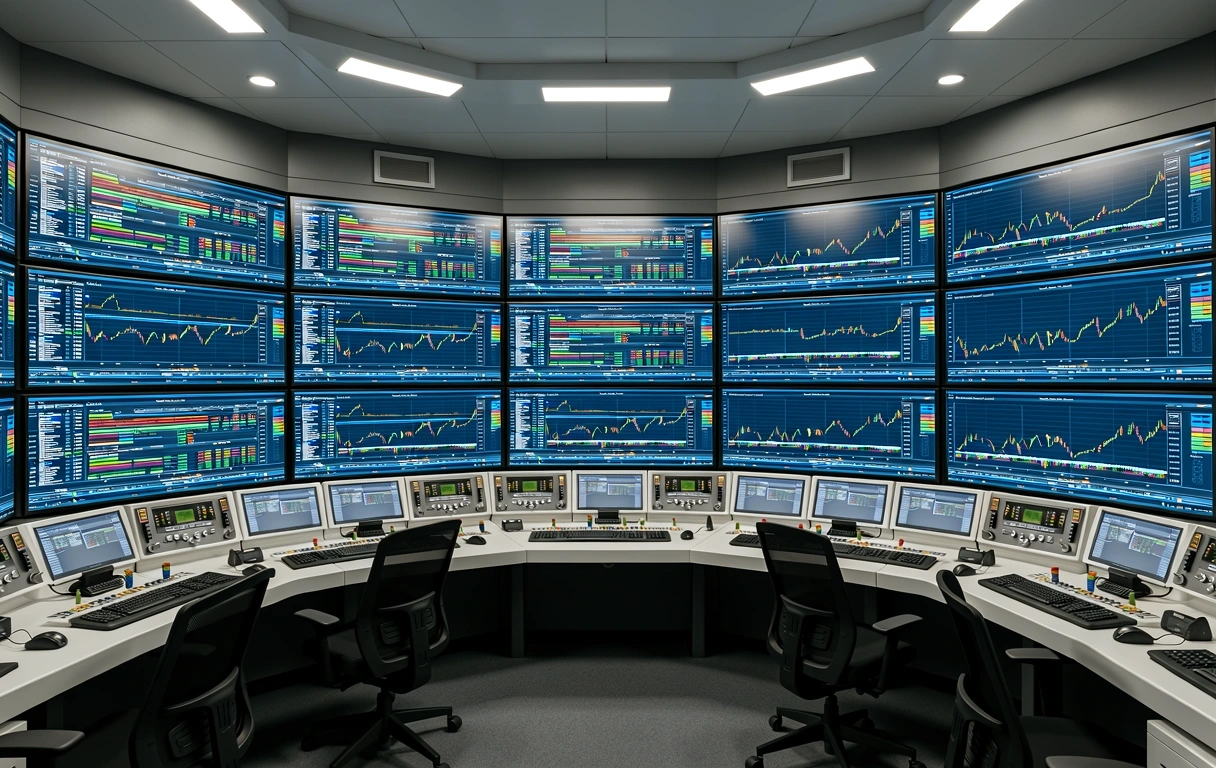
Monte Carlo &
Sensitivity Stress Tests
We don't just ask if a strategy works; we ask why it might stop working. Our verification suite runs thousands of permutations to find the "breaking point" of every system.
Parameter Stability
If a minor change in an entry parameter (e.g., changing a 10-day moving average to 11 days) collapses the returns, the system lacks robustness. We only deploy systems with broad "plateaus" of profitability.
Trade Shuffling
By randomizing the order of historical trades (Monte Carlo simulation), we calculate the probability of ruin and the "true" maximum expected drawdown over thousands of simulated paths.
Alpha Decay Monitoring
Markets evolve. Our systems include automated triggers that pause trading if live performance deviates significantly from the statistical boundaries established during the verification phase.
The Lab Workflow
Every quant system developed in our Bangkok boutique must pass through these sequential gates. Failure at any stage results in immediate disposal of the hypothesis.
- 1 Hypothesis Formation
- 2 Data Cleaning & Scrubbing
- 3 Backtesting & Optimization
- 4 Robustness Verification
- 5 Incubation (Paper Trading)
Raw Data Cleanliness
Quantitative models are only as good as the data they eat. We spend significant resources correcting for survivorship bias, adjustment errors in dividends/splits, and "bad ticks" that can create illusory arbitrage opportunities.
Our proprietary cleaning algorithms ensure that the historical price action used for testing is a 1:1 match for the liquidity actually available at that moment in time.
Walk-Forward Analysis
We employ Walk-Forward Analysis (WFA) to simulate how a model would have been re-optimized over time. This technique provides a much more realistic expectation of live performance than a single static backtest.
Once a model passes WFA, it enters an incubation period. For 90 days, the model trades in a simulated environment using real-time data feeds. We compare the "paper" execution to the theoretical backtest. Any deviation—positive or negative—triggers a full review.
Model Risk Disclosure
While our methodology is designed to be exhaustive, all trading carries inherent risk. Quantitative systems are susceptible to "black swan" events, infrastructure failures, and rapid changes in market microstructure that no historical data can fully predict.
Bangkok Quant Systems does not guarantee future results based on historical performance. Our verification process is a tool for risk mitigation and probability enhancement, not a shield against market loss. We encourage all clients and partners to review our risk management documentation in full before engaging with any system.

Local Presence, Global Standards
Located in the heart of Bangkok (Bangkok 59), our team combines local insight into emerging Asian markets with the rigorous mathematical standards of global institutional finance.
Core Verification Tools
Ready to explore our research?